
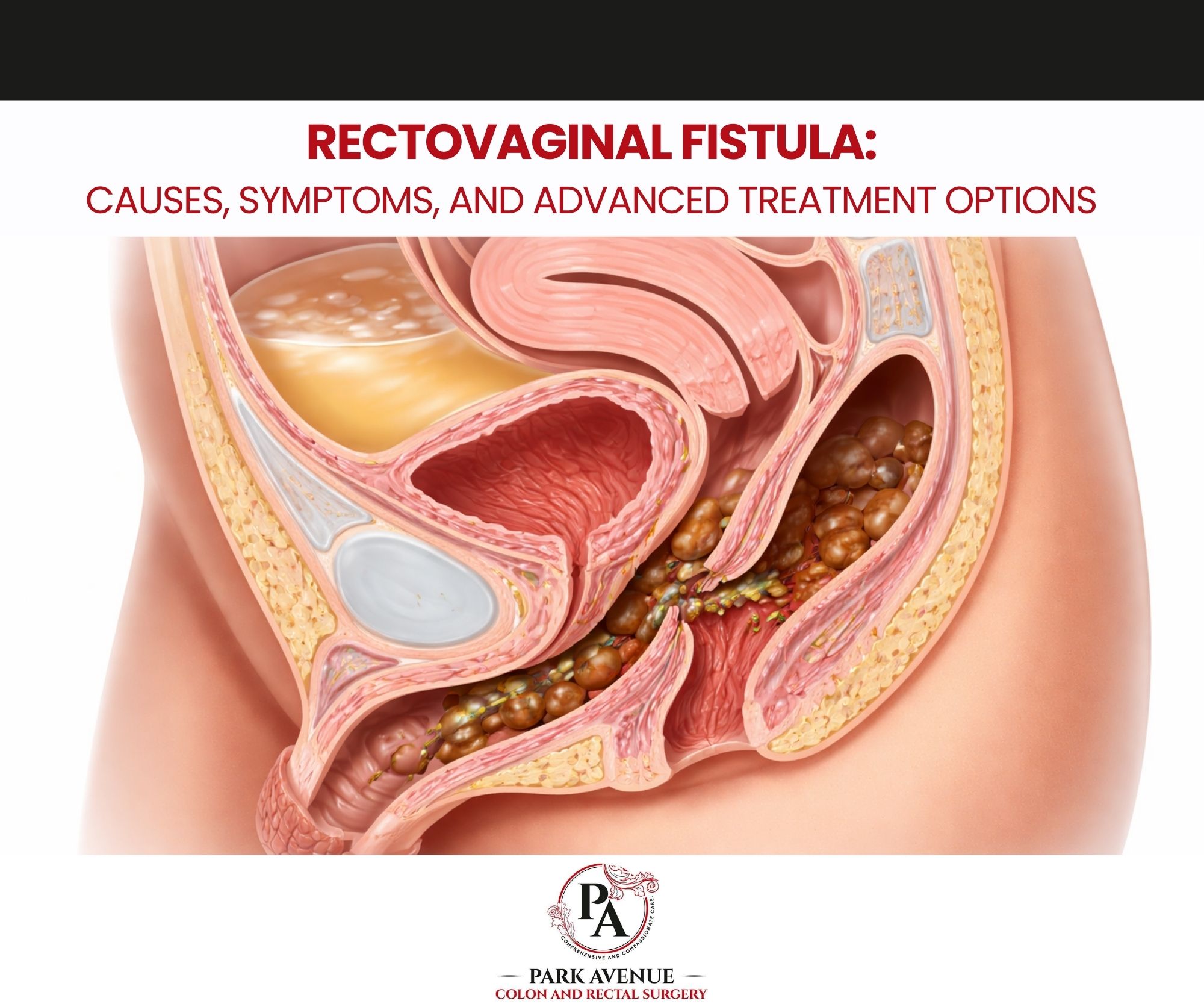
A rectovaginal fistula is a rare but distressing medical condition that can significantly impact a woman’s quality of life. It occurs when an abnormal connection forms between the rectum and the vagina, allowing stool or gas to pass through the vagina. While this condition can feel overwhelming or embarrassing, it is important to know that effective, specialized treatments are available—and you do not have to navigate this alone.
At Park Avenue Colon and Rectal Surgery, our experienced team provides compassionate, expert care for women dealing with complex colorectal and pelvic floor conditions, including rectovaginal fistulas.
What Is a Rectovaginal Fistula?
A rectovaginal fistula is an abnormal passageway between the rectum and the vagina. Because of this connection, contents from the rectum may leak into the vaginal canal, leading to physical discomfort, recurrent infections, and emotional distress.
Although uncommon, rectovaginal fistulas require prompt evaluation and individualized treatment by a board-certified colorectal surgeon with expertise in pelvic floor disorders.
Common Causes of Rectovaginal Fistula
Rectovaginal fistulas can develop for several reasons, including:
- Childbirth trauma, particularly prolonged labor or severe perineal tears
- Previous pelvic or colorectal surgery
- Inflammatory bowel disease, such as Crohn’s disease
- Radiation therapy to the pelvic area
- Infections or abscesses in the rectal or vaginal region
- Pelvic malignancies
Understanding the underlying cause is essential for determining the most effective treatment approach.
Symptoms to Watch For
Symptoms of a rectovaginal fistula may vary in severity but commonly include:
- Passage of stool or gas through the vagina
- Foul-smelling vaginal discharge
- Recurrent vaginal or urinary tract infections
- Irritation or pain in the vaginal or rectal area
- Discomfort during intimacy
If you experience any of these symptoms, it is important to seek medical care promptly.
Diagnosis and Evaluation
At Park Avenue Colon and Rectal Surgery, diagnosis begins with a thorough medical history and physical examination. Additional diagnostic tools may include:
- Imaging studies such as MRI or CT scans
- Endoscopic evaluations
- Dye tests to identify the fistula tract
Our goal is to precisely define the fistula and its cause so that treatment can be tailored to your specific condition.
Treatment Options for Rectovaginal Fistula
Treatment depends on the size, location, cause, and complexity of the fistula, as well as the patient’s overall health.
Non-Surgical Management
In select cases, especially small fistulas caused by infection or inflammation, conservative management such as antibiotics, bowel rest, or medical therapy for Crohn’s disease may be appropriate.
Surgical Repair
Many rectovaginal fistulas require surgical correction. Surgical options may include:
- Local fistula repair
- Advancement flap procedures
- Tissue grafts or muscle flaps
- Staged surgery in complex cases
Our surgeons use advanced, evidence-based techniques to maximize healing and minimize recurrence.
Why Choose Park Avenue Colon and Rectal Surgery?
- Specialized expertise in colorectal and pelvic floor conditions
- Personalized treatment plans
- Compassionate, discreet care in a private setting
- Convenient Manhattan location
We understand the sensitive nature of this condition and prioritize both medical excellence and patient comfort.
Frequently Asked Questions (Q&A)
Is a rectovaginal fistula life-threatening?
While not typically life-threatening, it can cause serious infections and significantly affect quality of life if left untreated.
Can a rectovaginal fistula heal on its own?
Small fistulas may close with conservative treatment, but many require surgical intervention for definitive repair.
How long is recovery after surgery?
Recovery time varies depending on the procedure but generally ranges from a few weeks to several months. Your surgeon will provide detailed post-operative guidance.
Will surgery affect future pregnancies?
In some cases, yes. Your surgeon will discuss family planning considerations and delivery options based on your individual situation.
Is the condition common?
Rectovaginal fistulas are relatively rare, but they are more common in women with obstetric injuries or inflammatory bowel disease.
When should I see a specialist?
If you notice symptoms such as vaginal passage of stool or gas, persistent discharge, or recurrent infections, you should seek evaluation from a colorectal specialist as soon as possible.
Contact Information
Park Avenue Colon and Rectal Surgery
36 E 36th St, 1C
New York City, NY 10016
📞 Phone: (646) 822-0228