
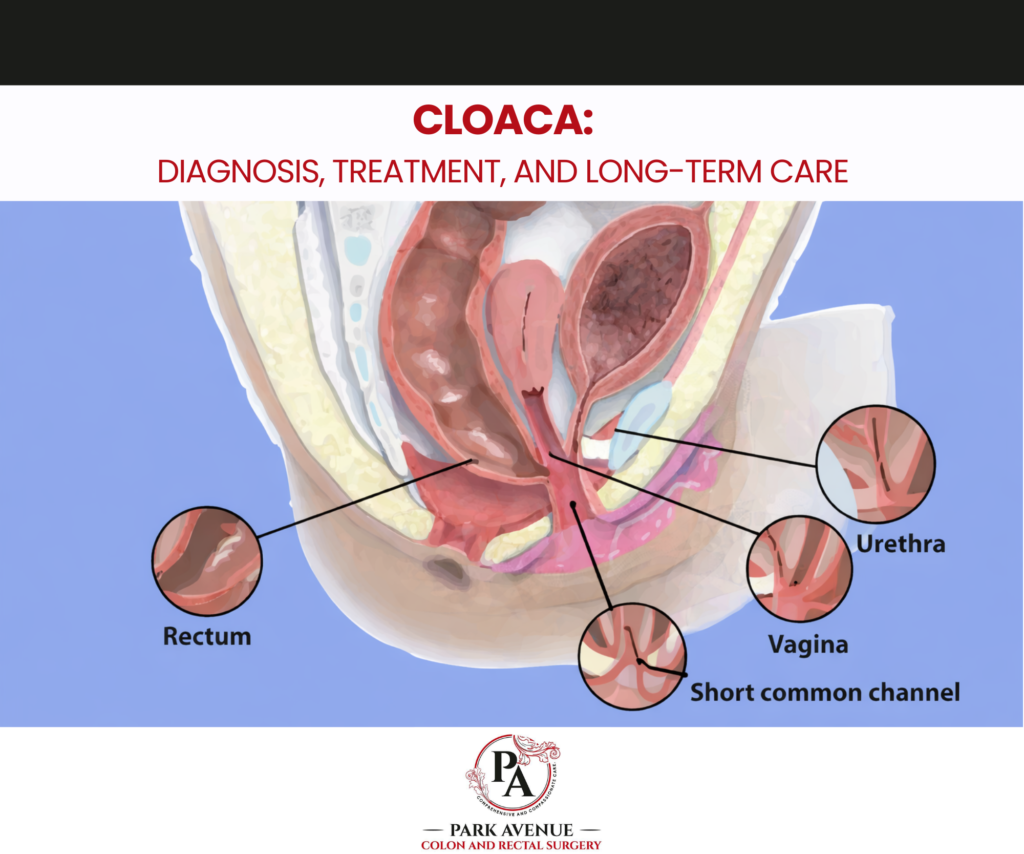
Congenital colorectal conditions can be complex and overwhelming, especially when they affect multiple organ systems. One such rare condition is cloaca, a congenital anomaly that requires highly specialized medical care and long-term management. At Park Avenue Colon and Rectal Surgery, our team is experienced in diagnosing, coordinating care for, and managing complex colorectal and pelvic conditions, working closely with multidisciplinary specialists to ensure optimal outcomes for patients and families.
What Is Cloaca?
Cloaca is a rare congenital condition that occurs in females, where the rectum, vagina, and urinary tract merge into a single common channel instead of developing into three separate openings. This condition forms early in fetal development and is typically identified at birth or shortly thereafter.
Because cloaca affects multiple systems—including colorectal, urinary, and reproductive anatomy—treatment requires careful planning, specialized surgical expertise, and long-term follow-up.
Causes and Risk Factors
The exact cause of cloaca is not fully understood. It is believed to result from disruptions during embryologic development between the 4th and 7th weeks of pregnancy. Most cases occur sporadically and are not inherited. Cloaca may also be associated with other congenital conditions involving the spine, kidneys, or gastrointestinal tract.
Diagnosis of Cloaca
Cloaca is often diagnosed at birth during a newborn physical examination. Additional diagnostic testing is typically required to understand the anatomy in detail, including:
- Ultrasound imaging
- MRI studies
- Contrast studies of the urinary and gastrointestinal systems
- Endoscopic evaluations in some cases
A thorough diagnostic process is essential for developing a safe and effective treatment plan.
Treatment and Surgical Management
Treatment for cloaca is surgical and usually performed in stages. Early interventions may be necessary to ensure proper urinary and bowel drainage. Definitive reconstructive surgery is typically planned later and may involve:
- Separation of the rectum, vagina, and urinary tract
- Reconstruction of the anus and surrounding structures
- Coordination with pediatric urology and gynecology specialists
At Park Avenue Colon and Rectal Surgery, we collaborate with multidisciplinary teams to ensure that each patient receives individualized care based on their specific anatomy and long-term needs.
Long-Term Care and Outcomes
Patients with cloaca often require long-term follow-up into adolescence and adulthood. Ongoing care may address:
- Bowel function and continence
- Urinary control
- Sexual and reproductive health
- Quality of life considerations
With appropriate treatment and monitoring, many patients go on to live full, active lives.
Cloaca: Frequently Asked Questions
Is cloaca a life-threatening condition?
Cloaca itself is not typically life-threatening, but without proper treatment it can lead to serious complications such as infections, kidney damage, or bowel obstruction. Early diagnosis and expert care are critical.
How rare is cloaca?
Cloaca occurs in approximately 1 in 50,000 live births, making it a very rare condition that requires specialized expertise.
Can cloaca be corrected?
Yes. While treatment often involves multiple surgeries, modern surgical techniques allow for effective reconstruction and long-term management in most cases.
Will a patient with cloaca have normal bowel function?
Bowel function outcomes vary depending on anatomy and treatment, but many patients achieve good bowel control with proper surgical repair and ongoing care.
Does cloaca affect fertility?
Some individuals with cloaca can have normal reproductive function, while others may face challenges. Long-term gynecologic follow-up is an important part of care.
Who should manage cloaca care in adulthood?
Adults with a history of cloaca benefit from follow-up with experienced colon and rectal surgeons who understand congenital anorectal conditions and their long-term implications.
Expert Care at Park Avenue Colon and Rectal Surgery
At Park Avenue Colon and Rectal Surgery, we are committed to providing compassionate, expert care for patients with complex colorectal conditions. Whether you are seeking ongoing management, evaluation, or coordination of care, our team is here to help.
Contact Information
Park Avenue Colon and Rectal Surgery
36 E 36th St, 1C
New York City, NY 10016
📞 Phone: (646) 822-0228