
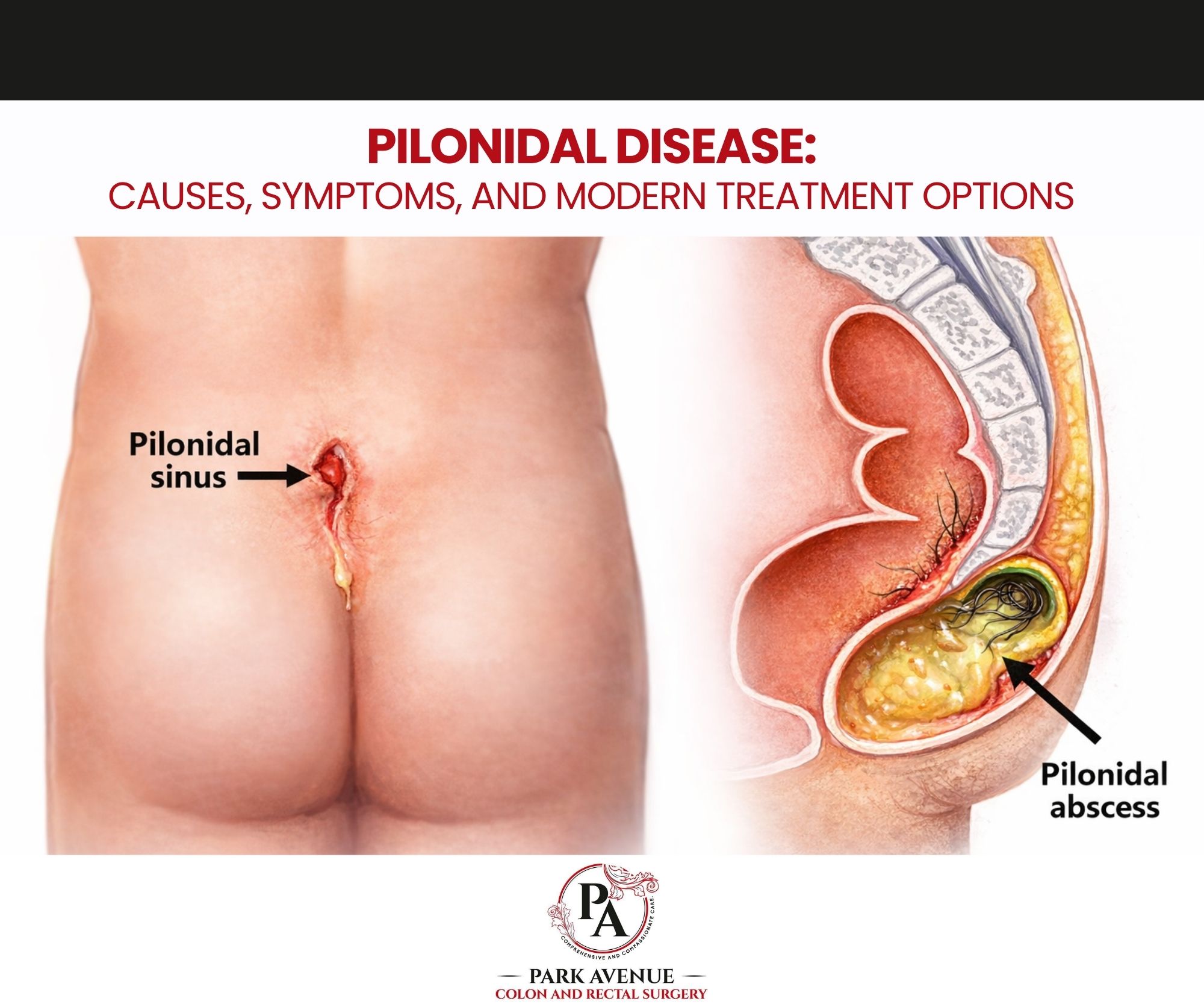
Pilonidal disease is a common but often misunderstood condition that can cause significant discomfort and disruption to daily life. At Park Avenue Colon and Rectal Surgery, our experienced colorectal specialists provide expert evaluation and advanced treatment options to help patients find lasting relief from pilonidal disease.
This guide explains what pilonidal disease is, why it occurs, how it’s treated, and when to seek care from a colorectal specialist.
What Is Pilonidal Disease?
Pilonidal disease is a chronic skin and soft tissue condition that develops near the tailbone, typically in the crease between the buttocks. It often begins as a small cyst or abscess that can become infected, leading to pain, swelling, drainage, and recurrent infections if left untreated.
The term pilonidal comes from Latin words meaning “nest of hair,” reflecting one of the primary contributors to the condition.
What Causes Pilonidal Disease?
Pilonidal disease is believed to result from a combination of factors, including:
- Ingrown or loose hairs that penetrate the skin
- Friction or prolonged sitting
- Pressure or trauma to the tailbone area
- Excessive sweating
- Deep natal cleft anatomy
- Family history or genetic predisposition
Once hair becomes trapped beneath the skin, the body may react with inflammation or infection, forming a cyst or abscess.
Common Symptoms of Pilonidal Disease
Symptoms can vary depending on whether the condition is acute or chronic, but commonly include:
- Pain or tenderness near the tailbone
- Swelling or redness in the upper buttock crease
- Drainage of pus or blood
- Foul-smelling discharge
- Fever (in cases of infection)
- Recurrent flare-ups or non-healing wounds
If symptoms recur or worsen, professional evaluation is important to prevent complications.
How Is Pilonidal Disease Diagnosed?
Diagnosis is typically made through a physical examination by a colorectal specialist. Imaging studies are rarely required unless complications are suspected. Early diagnosis allows for more conservative treatment options and improved outcomes.
Treatment Options for Pilonidal Disease
Treatment depends on the severity and recurrence of the condition:
Conservative Management
- Hair removal and hygiene education
- Observation for mild or early cases
Abscess Drainage
- Incision and drainage to relieve pain and infection
Surgical Treatment
For chronic or recurrent pilonidal disease, surgery may be recommended. Modern surgical techniques focus on:
- Removing diseased tissue
- Reducing recurrence risk
- Promoting faster healing
- Minimizing discomfort and downtime
At Park Avenue Colon and Rectal Surgery, treatment plans are individualized to each patient’s condition, lifestyle, and goals.
Comprehensive Q&A: Pilonidal Disease
Q: Who is most at risk for pilonidal disease?
A: Pilonidal disease most commonly affects young adults, particularly men, individuals with coarse body hair, and those who sit for long periods.
Q: Is pilonidal disease contagious?
A: No, pilonidal disease is not contagious and cannot be spread from person to person.
Q: Can pilonidal disease go away on its own?
A: Mild cases may temporarily improve, but chronic or recurrent pilonidal disease typically requires medical or surgical treatment to prevent ongoing problems.
Q: What happens if pilonidal disease is left untreated?
A: Untreated pilonidal disease can lead to repeated infections, chronic drainage, scarring, and prolonged discomfort.
Q: Is surgery always necessary?
A: Not always. Some patients respond well to conservative treatment or drainage. Surgery is usually recommended for recurrent or chronic cases.
Q: How long does recovery take after treatment?
A: Recovery time varies depending on the type of treatment. Many modern surgical approaches allow patients to return to normal activities relatively quickly.
Q: Can pilonidal disease come back after treatment?
A: Recurrence is possible, but proper surgical technique, hygiene, and preventive care significantly reduce the risk.
When to See a Colorectal Specialist
If you experience persistent pain, swelling, drainage, or repeated infections near the tailbone, it’s important to consult a colorectal specialist. Early expert care can prevent complications and improve long-term results.
Contact Information
Park Avenue Colon and Rectal Surgery
36 E 36th St, 1C
New York City, NY 10016
Phone: (646) 822-0228