
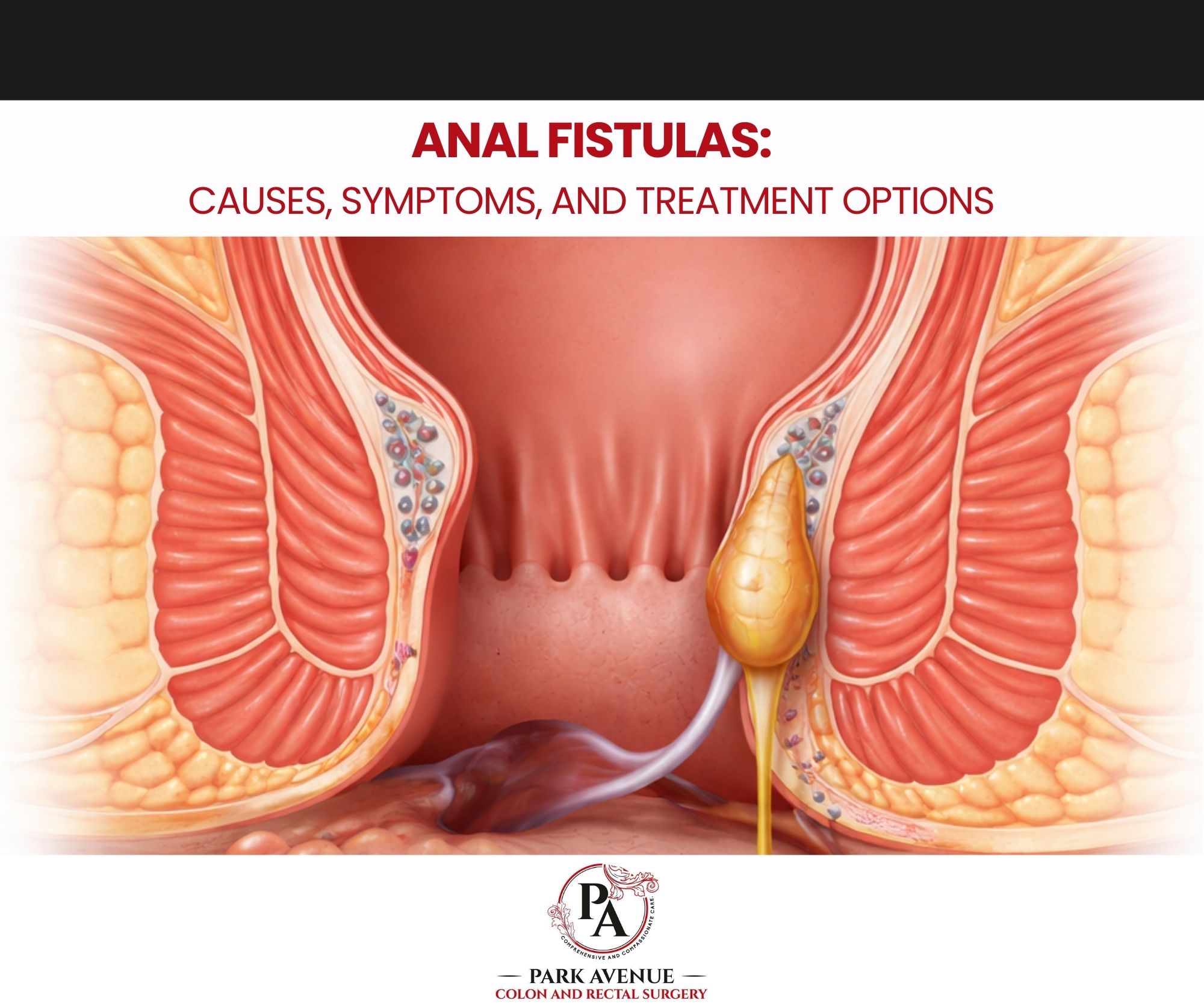
Anal fistulas are a common but often misunderstood colorectal condition that can significantly impact a person’s quality of life. At Park Avenue Colon and Rectal Surgery, our board-certified specialists provide expert diagnosis and advanced treatment options to help patients find lasting relief with compassion and discretion.
This guide explains what anal fistulas are, why they occur, how they are treated, and when to seek professional care.
What Is an Anal Fistula?
An anal fistula is an abnormal tunnel that forms between the inside of the anal canal and the skin surrounding the anus. It usually develops as a result of an infection in an anal gland that fails to heal properly. Once formed, a fistula rarely resolves on its own and often requires surgical treatment.
Common Causes of Anal Fistulas
Anal fistulas most often develop due to:
- An anal abscess that does not heal completely
- Blocked anal glands leading to infection
- Chronic inflammatory bowel diseases such as Crohn’s disease
- Trauma or injury to the anal area
- Previous colorectal surgery
- Radiation therapy or infections such as tuberculosis (less common)
Early evaluation by a colorectal specialist is essential to prevent complications.
Symptoms of an Anal Fistula
Symptoms can range from mild to severe and may include:
- Persistent pain or swelling near the anus
- Recurrent anal abscesses
- Drainage of pus or blood from an opening near the anus
- Skin irritation or redness
- Pain during bowel movements
- Fever or fatigue if infection is present
If you are experiencing any of these symptoms, prompt medical attention is recommended.
How Are Anal Fistulas Diagnosed?
At Park Avenue Colon and Rectal Surgery, diagnosis begins with a detailed medical history and physical examination. Additional diagnostic tools may include:
- Anoscopy or proctoscopy
- Endoanal ultrasound
- MRI imaging for complex fistulas
These tools allow for precise mapping of the fistula, which is critical for successful treatment.
Treatment Options for Anal Fistulas
Treatment depends on the type, location, and complexity of the fistula. Our practice specializes in evidence-based, minimally invasive approaches whenever possible.
Common treatments include:
- Fistulotomy: Opening the fistula tract to allow it to heal from the inside out
- Seton Placement: A surgical thread placed to drain infection and preserve sphincter muscle
- Advancement Flap Procedures: Used for complex fistulas to protect continence
- LIFT Procedure: A sphincter-sparing technique for selected cases
Our surgeons prioritize both healing and preservation of bowel control.
Comprehensive Q&A: Anal Fistulas
Is an anal fistula serious?
While not life-threatening, anal fistulas can cause chronic pain, infection, and reduced quality of life if left untreated.
Can an anal fistula heal on its own?
In most cases, no. Anal fistulas typically require surgical intervention for complete healing.
Is surgery painful?
Procedures are performed with appropriate anesthesia. Most patients experience manageable discomfort during recovery, which improves steadily.
How long is recovery after fistula surgery?
Recovery time varies but generally ranges from a few weeks to a couple of months, depending on the procedure performed.
Will surgery affect bowel control?
When treated by an experienced colorectal surgeon, the risk of incontinence is minimized. Advanced techniques focus on sphincter preservation.
Can anal fistulas come back?
Recurrence is possible, especially in complex cases or in patients with Crohn’s disease. Ongoing follow-up is important.
When should I see a specialist?
If you have recurrent abscesses, persistent drainage, or anal pain, you should consult a colorectal specialist promptly.
Expert Care in Manhattan
At Park Avenue Colon and Rectal Surgery, we understand that conditions like anal fistulas can feel uncomfortable to discuss. Our team is committed to providing discreet, compassionate, and highly specialized care using the most advanced techniques available.
Contact Information
Park Avenue Colon and Rectal Surgery
36 E 36th St, 1C
New York City, NY 10016
📞 Phone: (646) 822-0228