
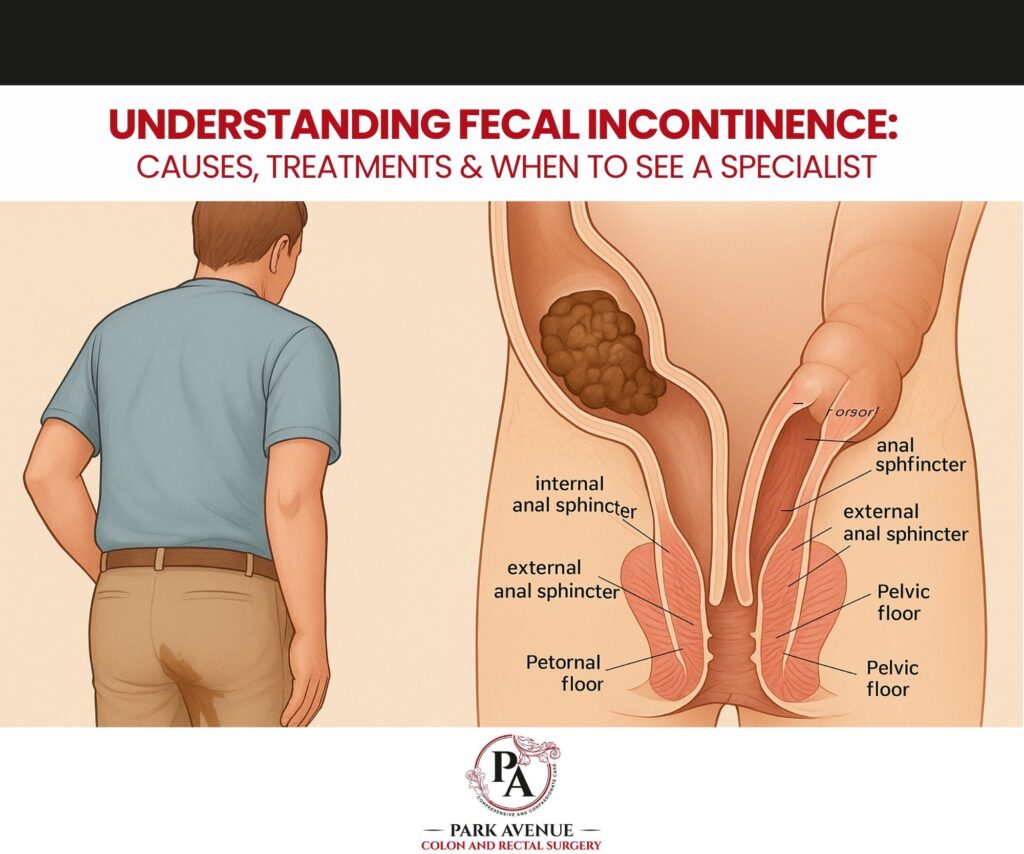
Fecal incontinence—also called bowel incontinence—is a condition in which a person loses the ability to control their bowel movements. It can range from occasional leakage of stool to a complete inability to hold bowel movements. Although common, it often goes undiscussed due to embarrassment or misunderstanding.
At Park Avenue Colon and Rectal Surgery, we are committed to providing compassionate, expert care for patients experiencing fecal incontinence. Under the leadership of Dr. Marsha Harris, our practice combines advanced diagnostic tools and cutting-edge treatments to restore comfort, confidence, and quality of life.
What Is Fecal Incontinence?
Fecal incontinence occurs when the muscles and nerves that control bowel movements are not functioning properly. These systems normally work together to hold stool in the rectum until it is appropriate to pass a bowel movement.
When these structures are weakened, damaged, or disrupted, leakage may occur.
Common Causes of Fecal Incontinence
Fecal incontinence can result from a single condition or a combination of issues. The most common causes include:
1. Muscle Damage
Damage to the anal sphincter muscles—often due to childbirth, trauma, or surgery—can weaken the ability to maintain bowel control.
2. Nerve Injury
Nerves that help sense stool or tighten the anal sphincter may be damaged by:
- Diabetes
- Stroke
- Childbirth
- Spinal cord injuries
3. Chronic Constipation
Long-term constipation can stretch and weaken the rectum, reducing sensation and control.
4. Chronic Diarrhea
Loose stool is harder to hold than formed stool, making leakage more likely.
5. Rectal Prolapse
The rectum slipping out of place can impair nerve and muscle function.
6. Aging
Pelvic floor muscles naturally weaken over time, making incontinence more likely.
Symptoms of Fecal Incontinence
Symptoms may be occasional or persistent and can include:
- Leakage of stool or mucus
- Inability to reach the toilet in time
- Gas incontinence
- Constipation alternating with leakage
- Decreased sensation of needing a bowel movement
If you notice any of these symptoms, a specialist evaluation can help identify the underlying cause and effective treatments.
How Fecal Incontinence Is Diagnosed at Park Avenue Colon and Rectal Surgery
We use a personalized, comprehensive approach that may include:
• Physical Examination
Assessment of sphincter strength and pelvic floor function.
• Anorectal Manometry
Measures pressure and muscle coordination in the rectum and anus.
• Endoanal Ultrasound
Visualizes the structure of the sphincter muscles.
• Defecography
Evaluates the rectum during bowel movement.
• Stool Studies or Colonoscopy
Used when other gastrointestinal conditions are suspected.
Our diagnostic process helps identify the exact cause so treatment can be precisely targeted.
Treatment Options for Fecal Incontinence
Treatment depends on the underlying cause and severity. At Park Avenue Colon and Rectal Surgery, we offer a range of evidence-based therapies:
1. Dietary & Lifestyle Modifications
- Increasing soluble fiber
- Managing diarrhea or constipation
- Scheduled toileting routines
- Pelvic floor exercises
2. Medications
Medication may help regulate stool consistency or calm bowel overactivity.
3. Pelvic Floor Therapy & Biofeedback
Specialized therapy to strengthen muscles and improve control.
4. Minimally Invasive Procedures
- Anal sphincter repair
- Bulking agent injections
- Sacral nerve stimulation (SNS)
- Treatment of hemorrhoids or rectal prolapse if present
5. Surgical Intervention
For complex or severe cases, surgical reconstruction or correction may be recommended.
Early evaluation leads to better outcomes, and most patients experience significant improvement with treatment.
Comprehensive Q&A About Fecal Incontinence
Q: Is fecal incontinence a normal part of aging?
Not necessarily. While aging can weaken pelvic floor muscles, fecal incontinence is not an inevitable part of aging and can be treated at any stage of life.
Q: Can childbirth cause fecal incontinence?
Yes. Vaginal deliveries—especially those involving forceps or tearing—can injure the anal sphincter and nerves. Many women do not experience symptoms until years later.
Q: Will dietary changes really help?
For many patients, increasing fiber, regulating stool consistency, and identifying trigger foods significantly improves symptoms.
Q: What tests will I need?
Testing is individualized. Common tests include anorectal manometry and endoanal ultrasound to assess muscle and nerve function.
Q: Is surgery always required?
No. Many cases improve with conservative treatments, including pelvic floor therapy and medication. Surgery is reserved for cases where structural repair is needed.
Q: Is fecal incontinence treatable?
Absolutely. With proper diagnosis and modern treatment options, most patients regain significant control and confidence.
Q: When should I see a colorectal surgeon?
If symptoms are recurring, worsening, or affecting your daily life, you should seek evaluation. Prompt treatment leads to better long-term results.
Why Choose Park Avenue Colon and Rectal Surgery?
- Board-certified colorectal surgeon
- Advanced diagnostic technology
- Individualized treatment plans
- Compassionate, discreet care
- Commitment to patient comfort, dignity, and long-term well-being
We help patients return to the life they love—without fear of accidents or embarrassment.
Contact Information
Park Avenue Colon and Rectal Surgery
📍 36 E 36th St, Suite 1C, New York City, NY 10016
📞 Phone: (646) 822-0228
🌐 Website: https://marshaharrismd.com
🗓️ Appointments: https://marshaharrismd.com/appointments
If you or a loved one is experiencing symptoms of fecal incontinence, compassionate expert care is available. Schedule a consultation today.