
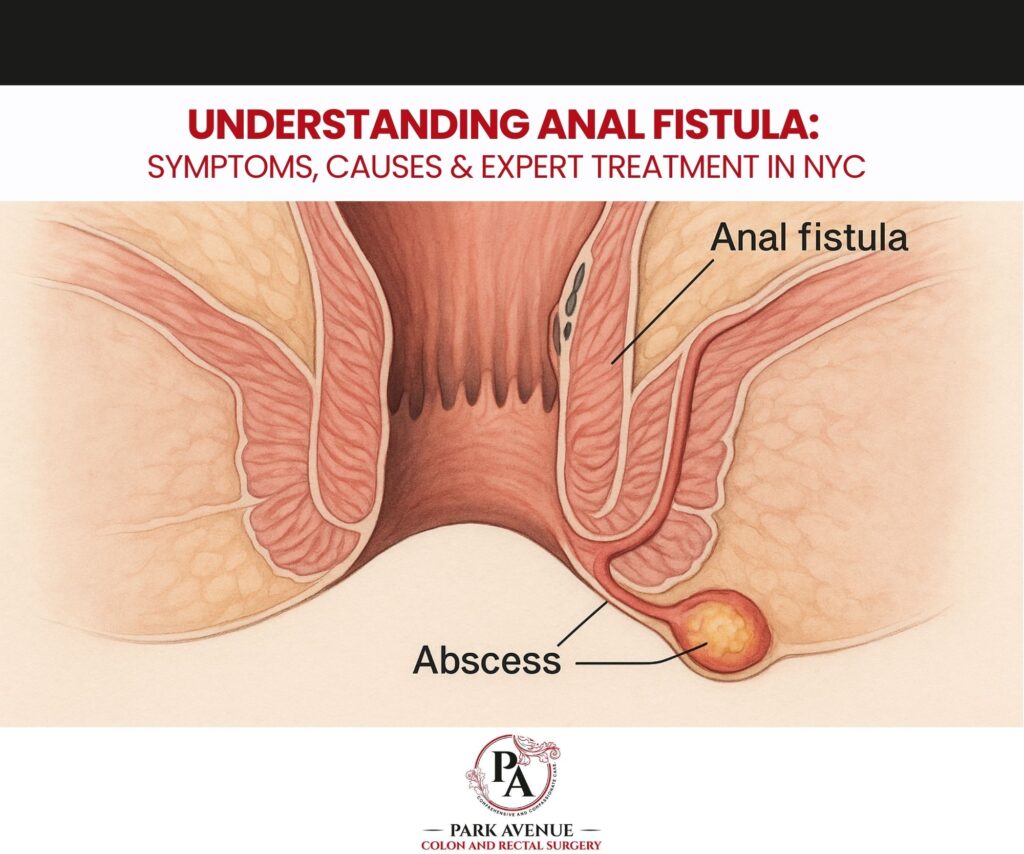
Anal fistulas are more common than many people realize—and without proper treatment, they can cause significant discomfort, recurrent infections, and disruption to daily life. At Park Avenue Colon and Rectal Surgery in New York City, we provide advanced, compassionate care for patients facing this condition. Our specialists focus on accurate diagnosis, minimally invasive techniques, and personalized treatment plans that promote long-term healing.
What Is an Anal Fistula?
An anal fistula is an abnormal tunnel that forms between the inside of the anal canal and the skin near the anus. It often develops after an anal gland becomes infected and forms an abscess. When the abscess drains or bursts, a tunnel may remain—this is the fistula.
Fistulas do not typically heal on their own and usually require medical or surgical treatment to prevent recurring infections.
Common Symptoms of an Anal Fistula
Symptoms may vary based on the fistula’s location and severity, but commonly include:
- Persistent pain or throbbing around the anus
- Drainage of pus or blood
- Irritation or redness of the surrounding skin
- Recurrent anal abscesses
- Difficulty sitting comfortably
- Fever or chills during active infection
- A visible opening or bump around the anus
If you notice any of these signs, early evaluation by a colorectal specialist is recommended to prevent complications.
What Causes an Anal Fistula?
The most frequent cause is a prior or ongoing anal abscess. Other contributing factors include:
- Inflammatory bowel disease (such as Crohn’s disease)
- Trauma to the anal area
- Sexually transmitted infections
- Radiation treatments
- Complicated infections of the anal glands
Since fistulas can be linked to underlying conditions, professional diagnosis is important to ensure proper and comprehensive care.
How Are Anal Fistulas Diagnosed?
At Park Avenue Colon and Rectal Surgery, diagnosis typically involves:
- A physical examination
- Review of medical history and symptoms
- Possible imaging studies such as MRI or endoanal ultrasound
These tools allow for precise mapping of the fistula, which is essential for selecting the most effective treatment.
Treatment Options for Anal Fistulas
Treatment plans vary based on the complexity and location of the fistula. Some of the most common procedures include:
1. Fistulotomy
A traditional and highly effective technique for simpler fistulas, where the tract is opened and allowed to heal naturally.
2. Seton Placement
A seton (a soft surgical thread) is placed in the fistula tunnel to help drain infection and promote controlled healing, often used in more complex cases.
3. LIFT Procedure (Ligation of the Intersphincteric Fistula Tract)
A sphincter-preserving procedure that closes the internal opening of the fistula while removing or sealing the infected tract.
4. Advancement Flap Repair
Used when preserving sphincter muscle is critical, this method covers the internal fistula opening with healthy tissue.
5. Minimally Invasive Options
Emerging treatments such as fibrin glue, plugs, and laser therapies may be appropriate in select cases.
Your surgeon will tailor the treatment approach based on your anatomy, symptoms, and long-term goals.
Comprehensive Q&A: Anal Fistula
Q: Can an anal fistula heal without surgery?
In most cases, no. Because fistulas are persistent tracts caused by prior infection, they usually do not close on their own. Without treatment, recurrent infections and abscesses are common.
Q: Is an anal fistula dangerous?
While not typically life-threatening, fistulas can lead to chronic infections, pain, and scarring. Rarely, untreated fistulas may cause systemic infection or more severe complications.
Q: What is recovery like after fistula treatment?
Recovery varies depending on the procedure. Many treatments allow patients to return to normal activities within a few days, though complete healing may take weeks. Your surgeon will provide personalized aftercare instructions.
Q: Are fistulas related to cancer?
Anal fistulas themselves do not usually cause cancer. However, chronic, long-standing fistulas—particularly in patients with inflammatory bowel disease—require monitoring by a specialist.
Q: How do I know which treatment option is right for me?
The best treatment depends on fistula complexity, involvement of sphincter muscles, and patient health. A consultation with an experienced colorectal surgeon ensures an accurate diagnosis and personalized plan.
Why Choose Park Avenue Colon and Rectal Surgery?
Patients in New York City trust our clinic for:
- Board-certified colorectal surgeons with decades of expertise
- Advanced diagnostic tools and minimally invasive treatment options
- Personalized, compassionate patient care
- A modern, comfortable facility in the heart of Manhattan
Your comfort, privacy, and long-term wellness are our priorities.
Contact Information
Park Avenue Colon and Rectal Surgery
📍 36 E 36th St, Suite 1C
New York City, NY 10016
📞 Phone: (646) 822-0228
🌐 Website: https://marshaharrismd.com
🗓 Appointments: https://marshaharrismd.com/appointments