
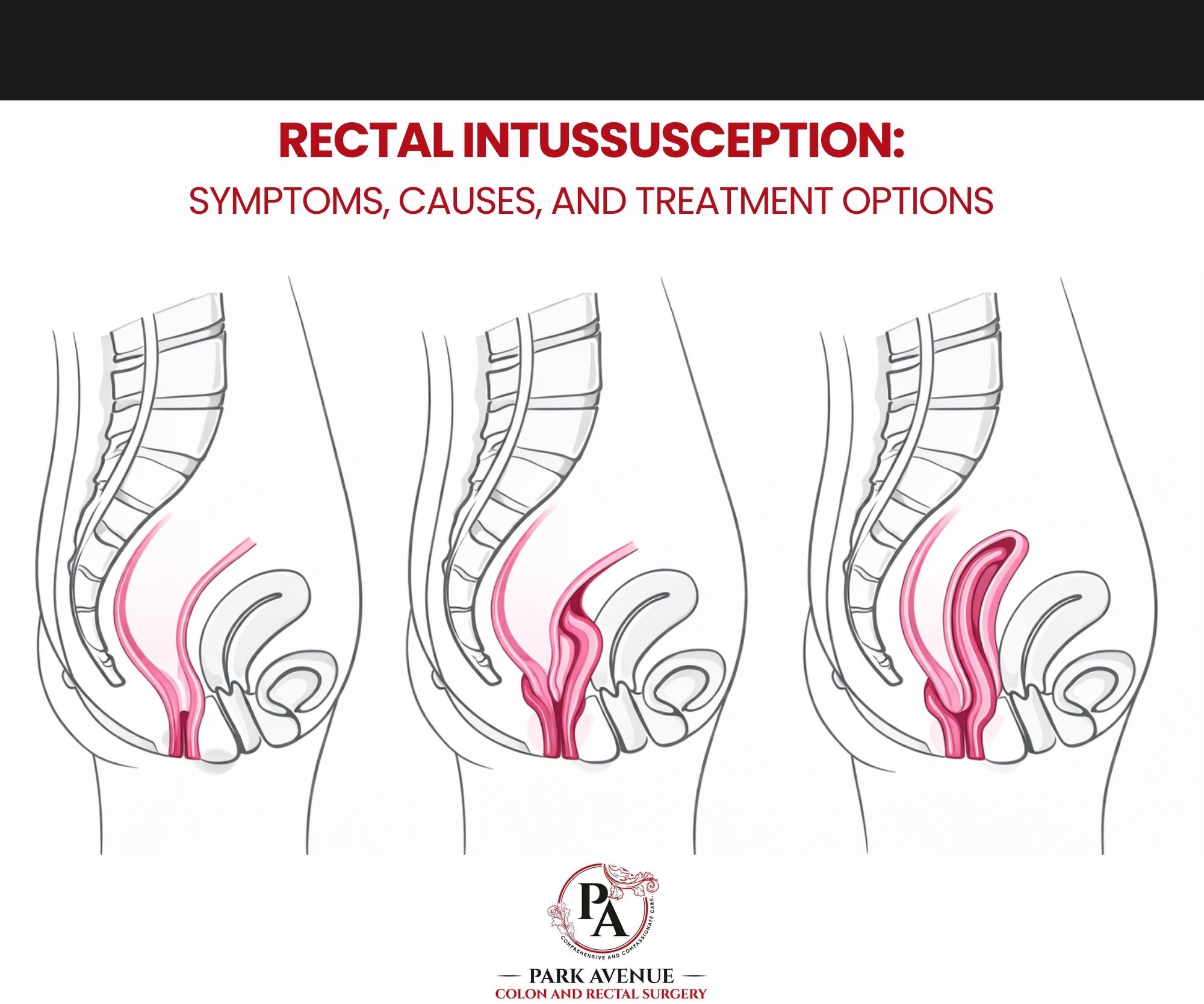
Rectal intussusception is a condition that can be uncomfortable, frustrating, and often misunderstood. At Park Avenue Colon and Rectal Surgery, we believe that informed patients are empowered patients. This guide explains what rectal intussusception is, how it’s diagnosed, and what modern treatment options are available to help you regain comfort and quality of life.
What Is Rectal Intussusception?
Rectal intussusception occurs when part of the rectum folds inward on itself, much like a telescope collapsing. Unlike intussusception seen in children, rectal intussusception in adults is usually a chronic condition and is often associated with pelvic floor dysfunction.
This internal folding can interfere with normal bowel movements and may worsen over time if left untreated.
Common Symptoms of Rectal Intussusception
Symptoms can vary in severity and may overlap with other colorectal or pelvic floor conditions. Common signs include:
- Difficulty emptying the bowels
- Sensation of incomplete evacuation
- Chronic constipation
- Rectal pressure or discomfort
- Straining during bowel movements
- Mucus discharge
- Occasional rectal bleeding
- Pelvic or rectal pain
Because symptoms can be subtle or progress gradually, many patients delay seeking care—often assuming the issue is “just constipation.”
What Causes Rectal Intussusception?
Rectal intussusception is typically caused by a combination of anatomical and functional factors, including:
- Weakness of the pelvic floor muscles
- Chronic straining during bowel movements
- Long-standing constipation
- Aging-related tissue changes
- Previous pelvic or colorectal surgery
- Neuromuscular dysfunction
Women, especially those with a history of childbirth, may be at higher risk due to pelvic floor changes.
How Is Rectal Intussusception Diagnosed?
A thorough evaluation is essential for an accurate diagnosis. At Park Avenue Colon and Rectal Surgery, diagnosis may involve:
- Detailed medical history and symptom review
- Physical and rectal examination
- Defecography (X-ray or MRI imaging during bowel movement simulation)
- Colonoscopy to rule out other conditions
- Anorectal manometry to assess muscle function
Proper diagnosis ensures that treatment is targeted and effective.
Treatment Options for Rectal Intussusception
Treatment depends on symptom severity and how much the condition affects daily life.
Non-Surgical Treatments
For mild to moderate cases, conservative options may include:
- Pelvic floor physical therapy
- Biofeedback therapy
- Dietary changes to improve stool consistency
- Stool softeners or fiber supplementation
These approaches aim to reduce straining and improve coordination of pelvic muscles.
Surgical Treatment
When symptoms are severe or persistent, surgery may be recommended. Surgical options focus on restoring normal anatomy and function and may include minimally invasive techniques. Your surgeon will discuss the most appropriate approach based on your condition and overall health.
Comprehensive Q&A: Rectal Intussusception
Q: Is rectal intussusception the same as rectal prolapse?
A: No. Rectal intussusception is an internal folding of the rectum, while rectal prolapse involves the rectum protruding externally through the anus. However, intussusception can sometimes progress to prolapse.
Q: Can rectal intussusception go away on its own?
A: It typically does not resolve without treatment. Symptoms may fluctuate, but the underlying issue usually persists.
Q: Is rectal intussusception dangerous?
A: While not usually life-threatening, untreated rectal intussusception can significantly impact quality of life and worsen over time.
Q: Does everyone with rectal intussusception need surgery?
A: No. Many patients improve with non-surgical treatments, especially when diagnosed early.
Q: How long is recovery after surgery?
A: Recovery depends on the procedure performed, but many patients return to normal activities within a few weeks, especially with minimally invasive techniques.
Q: When should I see a specialist?
A: If you experience chronic constipation, difficulty emptying your bowels, or persistent rectal discomfort, it’s important to consult a colorectal specialist.
Expert Care in New York City
At Park Avenue Colon and Rectal Surgery, our team specializes in diagnosing and treating complex colorectal and pelvic floor disorders with precision and compassion. We take the time to understand your symptoms and develop a personalized treatment plan focused on long-term relief.
Contact Information
Park Avenue Colon and Rectal Surgery
36 E 36th St, 1C
New York City, NY 10016
📞 Phone: (646) 822-0228