
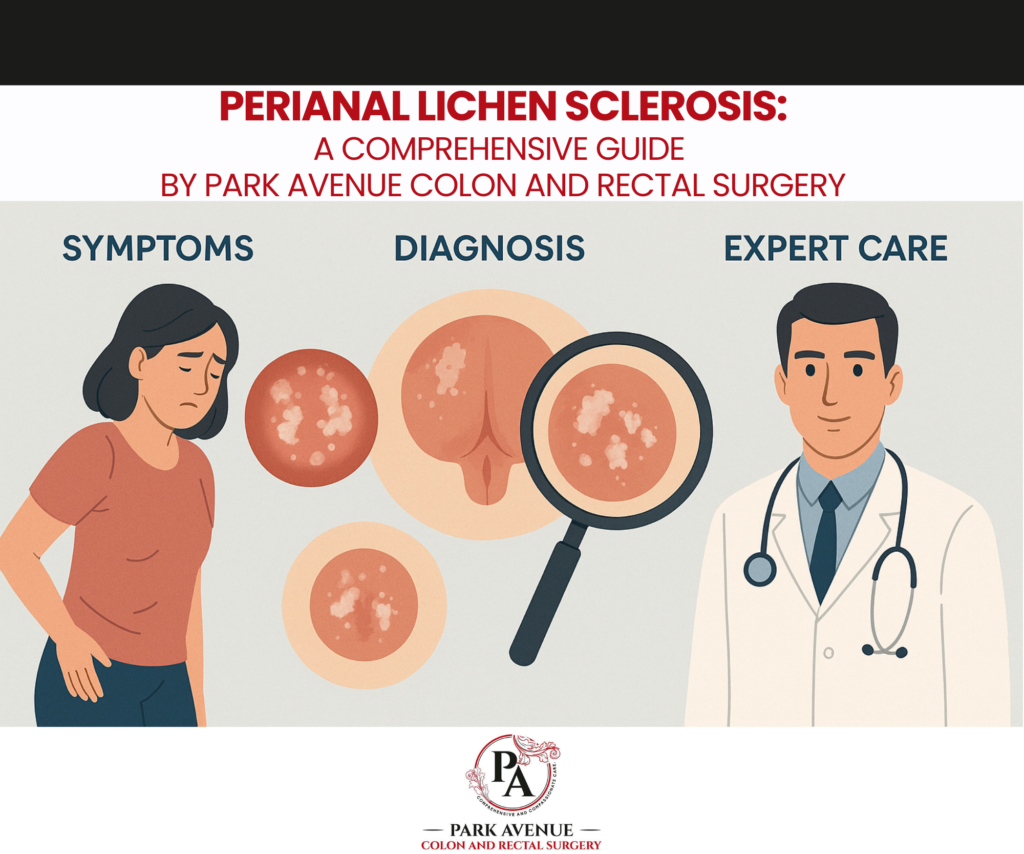
Perianal lichen sclerosis (LS), also known as lichen sclerosus, is a chronic inflammatory skin condition that affects the delicate skin around the anus. It can cause significant discomfort and impact daily life, yet it often goes undiagnosed for months—or even years—due to its subtle or misunderstood symptoms.
At Park Avenue Colon and Rectal Surgery, we provide compassionate, expert evaluation and treatment for conditions affecting the anal and rectal region, including perianal lichen sclerosis. With advanced diagnostic tools and individualized care, our practice helps patients find relief and regain comfort.
What Is Perianal Lichen Sclerosis?
Perianal lichen sclerosis is a long-term inflammatory skin disorder characterized by thinning, whitening, and scarring of the skin around the anus. While lichen sclerosis can affect other areas of the body, perianal involvement is particularly uncomfortable and often requires a colorectal specialist for proper diagnosis.
Though it can affect any gender or age group, perianal LS is more common in:
- Middle-aged and older adults
- Individuals with autoimmune disorders
- People with a history of anal fissures or chronic irritation
Early diagnosis and treatment can prevent serious complications, including scarring and structural changes to the anus.
Common Symptoms of Perianal Lichen Sclerosis
Symptoms may vary from mild to severe. Many patients experience:
- Itching or burning around the anus
- White, thin, or shiny skin patches
- Pain during bowel movements
- Small tears or fissures in the skin
- Bleeding or cracking of the skin
- Constipation due to discomfort
- Scar formation or tightening of the anal opening
Because symptoms can mimic hemorrhoids, dermatitis, or yeast infections, proper evaluation by a colorectal specialist is essential.
What Causes Perianal Lichen Sclerosis?
While the exact cause remains unclear, research suggests several contributing factors:
- Autoimmune components
- Genetic predisposition
- Hormonal influences
- Chronic irritation or skin trauma
- Previous anorectal conditions
Understanding the underlying cause can guide long-term treatment and prevention strategies.
How Is Perianal Lichen Sclerosis Diagnosed?
At Park Avenue Colon and Rectal Surgery, diagnosis typically involves:
- Medical history and symptom review
- Physical exam of the anal region
- Dermatoscopic evaluation (if needed)
- Biopsy (in cases where diagnosis is uncertain or cancer must be ruled out)
Our team prioritizes patient comfort and privacy throughout every step.
Treatment Options
Though perianal lichen sclerosis is chronic, effective treatment can significantly reduce symptoms and prevent progression.
1. Topical Steroid Therapy
High-potency topical corticosteroids are the first-line treatment to reduce inflammation and relieve symptoms.
2. Topical Immunomodulators
In cases where steroids are not suitable for long-term use, medications such as tacrolimus may be recommended.
3. Symptom Relief Measures
- Moisturizers or emollients
- Sitz baths
- Avoiding scented or irritating hygiene products
4. Treatment of Complications
Anal fissures, infections, or scarring may require additional medical or surgical care.
5. Ongoing Monitoring
Regular follow-ups ensure that symptoms remain controlled and allow early detection of any complications.
Comprehensive Q&A: Perianal Lichen Sclerosis
Q: Is perianal lichen sclerosis contagious?
A: No. Lichen sclerosis is not contagious and cannot be spread through sexual or skin contact.
Q: Can perianal LS lead to cancer?
A: While rare, long-standing untreated lichen sclerosis may increase the risk of squamous cell carcinoma. Regular monitoring significantly lowers this risk.
Q: Does lichen sclerosis ever go away completely?
A: LS is typically chronic, but symptoms can be managed effectively. Early treatment helps minimize scarring and long-term complications.
Q: What triggers flare-ups?
Common triggers include friction, moisture, tight clothing, hormonal changes, and stress. Identifying and avoiding triggers can help control symptoms.
Q: Can men get perianal lichen sclerosis?
A: Yes. Though more common in women, men can also develop LS, including perianal involvement.
Q: What should I avoid if I have perianal LS?
Avoid:
- Harsh soaps
- Scented wipes
- Excessive scrubbing
- Tight clothing
- Long-term use of over-the-counter steroid creams without supervision
Q: When should I see a colorectal specialist?
You should seek evaluation if you experience persistent itching, discomfort, skin changes, or symptoms that resemble hemorrhoids but do not improve with typical treatments.
Why Choose Park Avenue Colon and Rectal Surgery?
Our NYC practice offers:
- Expertise in treating complex perianal conditions
- Personalized, patient-centered care
- State-of-the-art diagnostic tools
- A comfortable, discreet environment
We understand how sensitive these conditions can be and are committed to delivering compassionate, effective care.
Contact Us
Park Avenue Colon and Rectal Surgery
📍 36 E 36th St, 1C, New York City, NY 10016
📞 Phone: (646) 822-0228
🌐 Website: marshaharrismd.com
📅 Appointments: https://marshaharrismd.com/appointments