
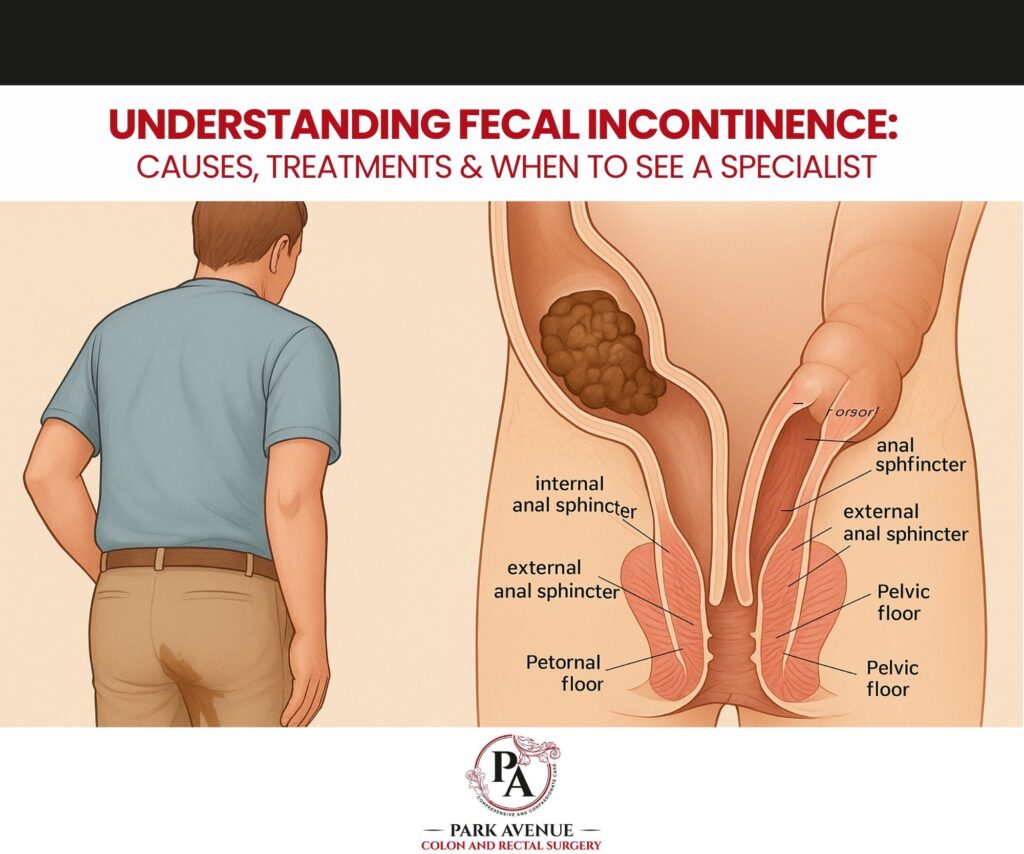
Fecal incontinence—the inability to control bowel movements—can be a deeply distressing condition that affects both physical comfort and emotional well-being. While it’s more common than many people realize, it’s also one of the least talked about digestive health issues. At Park Avenue Colon and Rectal Surgery, we believe that education, compassion, and expert care are essential to helping patients regain confidence and control.
This article explores what fecal incontinence is, why it happens, and the modern treatment options available to help patients return to a better quality of life.
What Is Fecal Incontinence?
Fecal incontinence refers to the accidental leakage of stool or gas due to problems with the muscles or nerves that control bowel function. Symptoms can range from occasional leakage when passing gas to a complete loss of bowel control. Regardless of severity, fecal incontinence is a medical condition—not something patients should feel embarrassed about or ignore.
Common Causes of Fecal Incontinence
Fecal incontinence often results from one or more underlying conditions, including:
- Muscle damage to the anal sphincter, often from childbirth, surgery, or trauma
- Nerve damage caused by diabetes, stroke, spinal injury, or chronic straining
- Chronic constipation, which can weaken rectal muscles over time
- Diarrhea, making stool harder to control
- Rectal prolapse or rectocele
- Age-related changes in pelvic floor strength
A thorough evaluation by a colorectal specialist is essential to identifying the exact cause and choosing the most effective treatment.
How Fecal Incontinence Is Diagnosed
Diagnosis typically begins with a detailed medical history and physical examination. Depending on symptoms, your colorectal surgeon may recommend additional testing such as:
- Anorectal manometry
- Endoanal ultrasound
- MRI imaging
- Colonoscopy (if indicated)
These tools help assess muscle strength, nerve function, and structural issues.
Treatment Options for Fecal Incontinence
Treatment is highly individualized and often begins with conservative approaches before progressing to advanced therapies if needed.
Non-Surgical Treatments May Include:
- Dietary modifications and fiber management
- Medications to regulate stool consistency
- Pelvic floor physical therapy and biofeedback
- Bowel training programs
Advanced and Surgical Options:
- Injectable bulking agents
- Sacral nerve stimulation
- Sphincter repair surgery
- Other minimally invasive colorectal procedures
At Park Avenue Colon and Rectal Surgery, treatment plans are tailored to each patient’s lifestyle, symptoms, and overall health.
Comprehensive Q&A: Fecal Incontinence
Q: Is fecal incontinence common?
A: Yes. Millions of adults experience fecal incontinence, but many do not seek help due to embarrassment.
Q: Can fecal incontinence be cured?
A: In many cases, symptoms can be significantly improved or fully resolved with proper treatment.
Q: Is fecal incontinence a normal part of aging?
A: No. While aging can increase risk, fecal incontinence is not something you have to accept as inevitable.
Q: Will I need surgery?
A: Not necessarily. Many patients improve with non-surgical treatments. Surgery is considered when conservative methods are not effective.
Q: When should I see a colorectal specialist?
A: If you experience ongoing bowel leakage, urgency, or loss of control, it’s important to seek professional evaluation promptly.
Q: Can lifestyle changes really make a difference?
A: Yes. Diet, bowel habits, and pelvic floor therapy can play a major role in symptom improvement.
Compassionate, Expert Care in New York City
If fecal incontinence is affecting your daily life, know that help is available. The team at Park Avenue Colon and Rectal Surgery offers discreet, expert care using the latest diagnostic tools and treatment options in a supportive environment.
Contact Information
Park Avenue Colon and Rectal Surgery
36 E 36th St, 1C
New York City, NY 10016
📞 Phone: (646) 822-0228